No products in the cart.

- This event has passed.
Partners in Safe Care: NABD-BC2 Contributes to the Global Dialogue on Patient Safety and NCDs
September 16
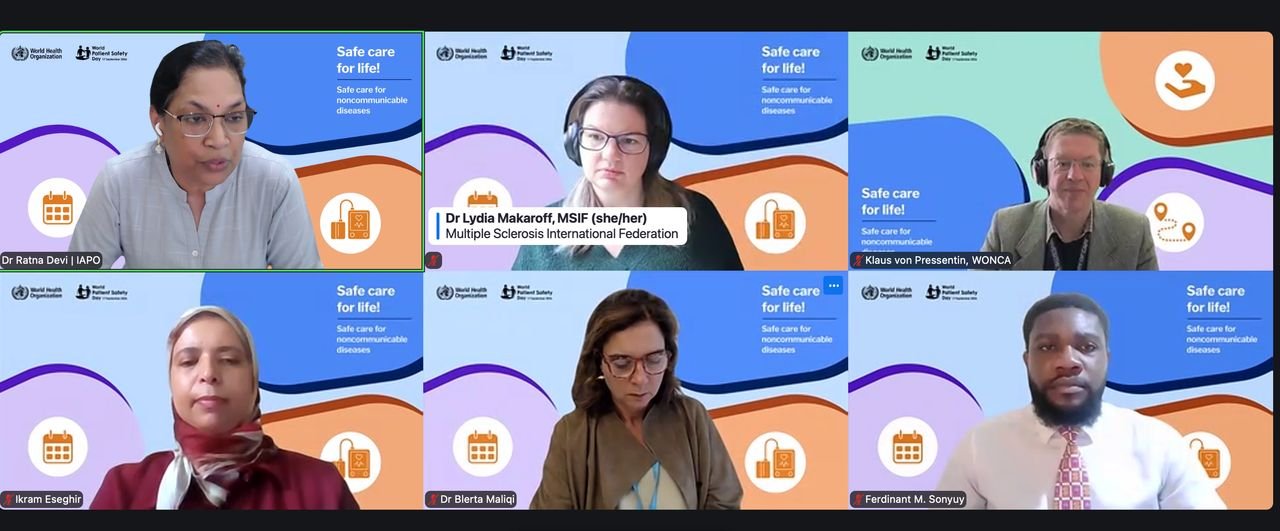
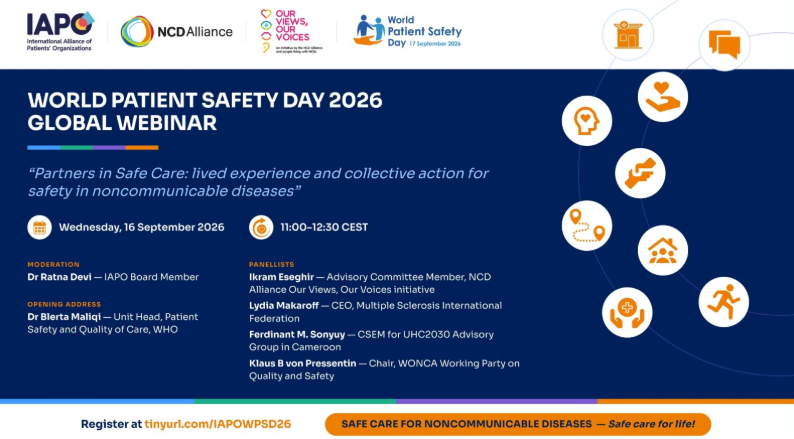
On 16 September 2026, NABD-BC2 participated in the global webinar “Partners in Safe Care: Lived Experience and Collective Action for Safety in Noncommunicable Diseases.”
Organised by the International Alliance of Patients’ Organizations (IAPO) and the NCD Alliance’s Our Views, Our Voices initiative, the webinar marked World Patient Safety Day 2026, under the theme “Safe care for noncommunicable diseases” and the slogan “Safe care for life!”
The 90-minute interactive session brought together more than 250 participants and representatives of the World Health Organization (WHO), patient organisations, civil society, family medicine, health professional networks and people living with noncommunicable diseases.
Patient safety throughout the NCD care journey
In her opening address, Dr Blerta Maliqi, Head of the Patient Safety and Quality of Care Unit at WHO Headquarters, situated the discussion within the objectives of World Patient Safety Day 2026. WHO’s campaign calls on health systems, healthcare facilities, professionals, civil society and people with lived experience to work together to reduce avoidable harm and improve the safety of care for people living with NCDs.
The discussions emphasised that patient safety in NCD care cannot be limited to isolated incidents or hospital-based treatment. Because conditions such as cancer, diabetes, cardiovascular diseases, stroke and multiple sclerosis may require care over many years, safety must be considered throughout the entire care journey; from prevention and early diagnosis to treatment, long-term follow-up, rehabilitation, palliative care and support at home.
Participants highlighted several points at which harm can occur, including:
- delayed or incorrect diagnosis;
- interruptions in access to essential medicines and treatment;
- insufficient explanations about treatment and possible side effects;
- communication failures between professionals and healthcare facilities;
- unclear referral pathways;
- unsafe transitions from hospital to home;
- challenges associated with multiple medicines and long-term adherence;
- inadequate psychosocial support and patient education; and
- insufficient consideration of patients’ circumstances, priorities and experiences.
Different stakeholders, one shared responsibility
Moderated by Dr Ratna Devi, IAPO Board Member and CEO and Co-founder of DakshamA Health and Education, the panel brought complementary perspectives to the discussion.
Contributions from patient advocates and patient organisations demonstrated how people living with NCDs can identify risks that may remain invisible in clinical records. Patients experience the consequences of fragmented services, medicine shortages, delayed referrals and instructions that may be difficult to follow in everyday life.
The civil-society perspective also drew attention to equity and to the particular barriers faced by people in underserved communities. Patient organisations can help connect communities with healthcare services, identify recurring difficulties and bring evidence from the field to health professionals and decision-makers.
The family-medicine and health-professional perspective reinforced the importance of coordinated, people-centred primary care, appropriately trained multidisciplinary teams, clear referral pathways and effective communication across different levels of the health system.
Together, these perspectives underlined that safe NCD care is a shared responsibility. Patients should be supported to understand their conditions, participate in decisions and communicate concerns, while health systems remain accountable for creating the conditions in which safe care is possible.
NABD-BC2’s contribution
Mrs Ikram Eseghir, Founder and President of NABD-BC2, participated as a member of the NCD Alliance Our Views, Our Voices Global Advisory Committee, representing the perspectives of people living with NCDs.
Drawing on her lived experience and NABD-BC2’s work with people affected by breast cancer in Morocco, she explained that safety risks frequently emerge between medical appointments: when information is incomplete, when a referral is delayed, when a medicine becomes inaccessible, or when a patient does not know whom to contact after encountering a problem.
She emphasised that lived experience should be recognised as a valuable source of patient-safety evidence. When experiences are collected and analysed systematically, they can help identify recurring gaps, improve services and inform health policies.
She also highlighted the difference between consultation and meaningful engagement. Meaningful involvement requires people living with NCDs and patient organisations to participate not only in discussions, but also in identifying risks, designing services, developing communication materials and evaluating whether interventions are genuinely improving safety.
At the same time, patient empowerment must never be used to transfer responsibility for systemic failures onto individuals. Health systems and institutions remain responsible for providing accessible, coordinated and safe care.
The role of patient organisations
The webinar demonstrated the important contribution patient organisations can make by:
- providing reliable, accessible and culturally appropriate information;
- supporting patients in navigating complex care pathways;
- identifying barriers to diagnosis, treatment and follow-up;
- facilitating communication between patients, families and healthcare professionals;
- collecting and communicating evidence from lived experience;
- supporting caregivers and vulnerable communities;
- contributing to the design of protocols and patient-safety initiatives; and
- advocating for equitable access to quality care.
These priorities closely reflect NABD-BC2’s work in breast cancer awareness and early detection, psychosocial support, peer support, individual guidance, patient navigation and the meaningful engagement of people affected by cancer.
From care designed for patients to care designed with them
A central conclusion from the webinar was that people living with NCDs should be recognised as partners in safety improvement—not simply as recipients of care.
Safe care requires collaboration among patients, families, healthcare professionals, policymakers, regulators, civil-society organisations and communities. It also requires mechanisms through which patients’ experiences can influence decisions and lead to measurable improvements.
NABD-BC2 thanks IAPO, the NCD Alliance, WHO, Dr Ratna Devi, all panellists, organisers and participants for creating an inclusive space in which lived experience, clinical expertise and civil-society perspectives could contribute to a shared commitment to safer NCD care.
The webinar recording is available here:
Watch “Partners in Safe Care: Lived Experience and Collective Action for Safety in Noncommunicable Diseases”
Further information:
Safe care for life means listening, learning and acting together.